Dr. Berg Supplements Review (2026): Credentials, Labels and Value

Disclosure & independence
Dr. Berg Nutritionals did not pay for this review, did not supply the product, and did not see the article before publication. No brand is given approval over what is written here.
This article contains affiliate links. If you buy through one I may earn a commission, at no additional cost to you. A commission never changes a score, a ranking or a verdict: those are decided before any commercial link is considered.
Full details in my affiliate disclosure, editorial policy and testing methodology.
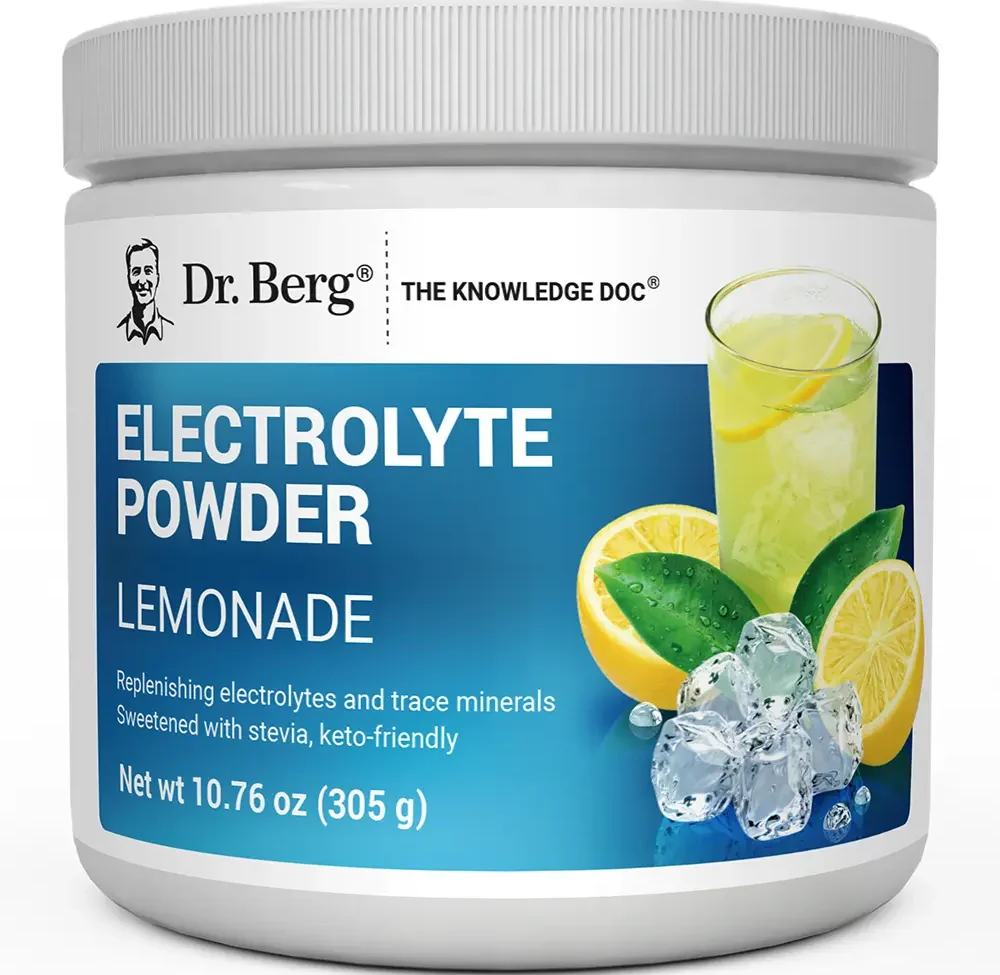
Dr. Berg is one of the largest health channels on the internet, and the questions people actually type about him are revealing: is Dr. Berg a real doctor, is Dr. Berg legit, Dr. Berg reviews. Those are trust questions, not product questions. This review answers both, and then turns to the Dr. Berg supplements themselves — using his own published credentials, his own supplement panels, and his own disclaimer, which turns out to be the most useful document on the entire site.
inareview verdict
6.5/10
Transparent about credentials and ingredients, but the flagship product is built backwards for the audience it is sold to. The supplement panels are published in full, the sweetener is stevia rather than sucralose, and the site states plainly that Dr. Berg is a chiropractor and not a medical doctor. The problem is the Electrolyte Powder: it is marketed into a keto and fasting audience yet contains 40 mg of sodium per serving — and sodium is the mineral that actually drives keto flu.
Buy it if you specifically want a high-potassium, low-sodium electrolyte drink and you are not using it for keto flu. Skip it if you are chasing fasting fatigue, take blood-pressure medication, or have kidney disease.
How this review was done
I want to be straight about the method, because it matters more than usual here. This is a credentials, label and claims analysis, not a hands-on trial. I have not taken these supplements.
Everything below comes from primary sources you can check yourself: Dr. Berg’s published biography and academic record on his own site, the supplement facts panel printed on the Electrolyte Powder, the current prices in his own store, and his own website disclaimer. Where I assess whether a product suits the audience it is sold to, that is my analysis and I show the arithmetic.
One thing I have deliberately left out. Searches around this name include questions about legal and regulatory history. I could not verify any of that from primary sources, so this review does not discuss it. Reporting unverified claims about a named individual is not something I am prepared to do, and I would rather leave a gap than fill it with something I cannot stand behind.
Is Dr. Berg a real doctor?
Yes — and the precise answer matters, so here it is from his own materials.
Dr. Eric Berg earned his Doctor of Chiropractic from Palmer College of Chiropractic in 1988. His published bio states that he is board-certified by the National Board of Chiropractic Examiners and has held licences in Virginia, California and Louisiana; that his academic background includes pre-medical studies at the University of Wisconsin Parkside and X-ray technician training through St. Philip’s College in Texas; and that he completed postgraduate training at the National-Lincoln School of Postgraduate Education. He describes himself as a health educator and best-selling author, with over 30 years in chiropractic care and natural health.
His own website then says something that most people asking the question never find, and it deserves quoting exactly:
“Dr. Eric Berg DC is not a medical doctor. He is a chiropractor. Dr. Berg and Dr. Berg Nutritionals do not diagnose or treat any medical illness or condition.”
Credit where it is due: that is a clearer disclosure than a great many wellness brands manage, and it is on his site rather than buried in a PDF. It also settles the question fairly. A Doctor of Chiropractic is a real, licensed clinical qualification. It is not a medical degree, and chiropractic training does not include the clinical nutrition, pharmacology and internal medicine components of a physician’s or a registered dietitian’s education.
What should you do with that? Neither dismiss it nor over-weight it. Treat the content as informed commentary from someone with a clinical background in a different discipline — closer to a very well-read health educator than to your endocrinologist. Where his advice concerns something you are being medically treated for, the answer is always the person prescribing your medication, not a video.
What Dr. Berg actually sells
The range is far wider than most people realise — more than sixty products in the store at the time of writing. It spans:
- Single-nutrient supplements — Vitamin B12 with B complex ($16.99), Potassium Tri-Blend Complex ($15.99), Benfotiamine 300 mg ($30.99), Berberine with Ceylon Cinnamon ($41.99), Niacin ($16.99), Wild-caught cod liver omega-3 ($29.99), probiotics with prebiotic blend ($21.99–$36.99).
- Electrolyte Powder — the flagship. 50 servings $35.99, 100 servings $46.99, in ten flavours.
- Bundles and “starter stacks” — Weight Loss, Energy, Digestion, Stress, Sleep, Joint and Daily Body Reboot stacks, $79.99 to $116.99.
- Food and lifestyle products — grain-free crackers, taco seasoning, fajita rub, organic castor oil, black seed oil, beetroot juice powder.
- Programmes — “The 30-Day Fix” at $148.00.
That breadth is itself worth noticing. This is not a supplement company that also makes videos; it is a media operation with a product line attached, and the catalogue has expanded into groceries. Nothing about that is improper — it is disclosed, and plenty of health educators monetise this way. But it does create the structural conflict you should hold in mind while watching any of the content: the same organisation that explains why you might be deficient in a nutrient also sells that nutrient. That is not an accusation of bad faith. It is a reason to check a second source before you add something to a basket, exactly as I set out in my guide to choosing a supplement that is actually worth it.
The Electrolyte Powder, panel in hand
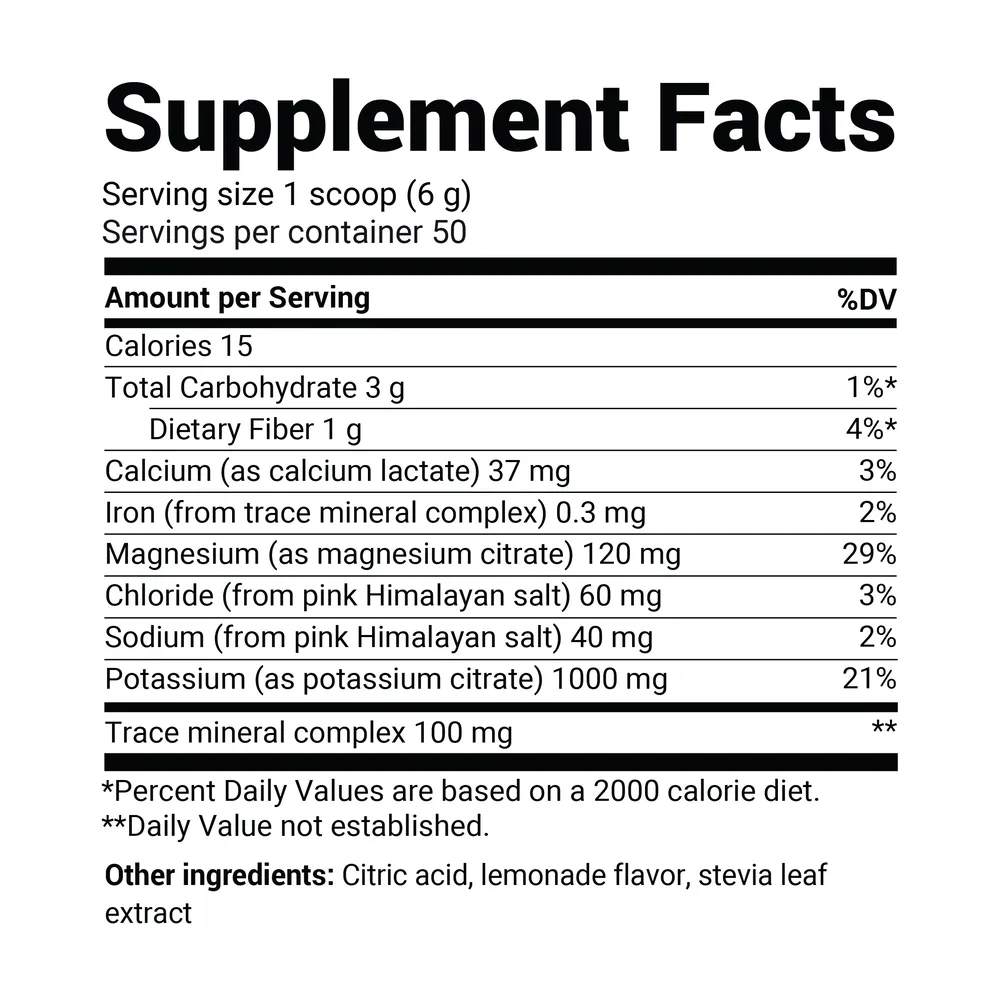
This is the best-seller and the product most people mean when they search the brand, so it is the one worth taking apart. Here is the full panel for the Lemonade flavour, one scoop (6 g), 50 servings per container:
- Calories 15 · Total carbohydrate 3 g · Dietary fibre 1 g
- Potassium (as potassium citrate) — 1,000 mg (21% DV)
- Magnesium (as magnesium citrate) — 120 mg (29% DV)
- Calcium (as calcium lactate) — 37 mg · Chloride (from pink Himalayan salt) — 60 mg
- Sodium (from pink Himalayan salt) — 40 mg (2% DV)
- Iron (from trace mineral complex) — 0.3 mg · Trace mineral complex — 100 mg
- Other ingredients: citric acid, flavour, stevia leaf extract
Three observations, in order of how much they should affect your decision.
1. Forty milligrams of sodium is the story
This product is sold into a keto and fasting audience. That audience’s characteristic problem — the headaches, fatigue, light-headedness and cramp people call “keto flu” — is driven substantially by sodium loss. When carbohydrate intake drops, insulin falls, and the kidneys excrete sodium and water. The practical fix, widely used by people who actually run low-carbohydrate diets, is to add sodium deliberately, often thousands of milligrams a day. That is not folklore: when researchers catalogued what people on ketogenic diets actually recommend to each other for keto flu, increasing sodium intake was the single most frequently proposed remedy, ahead of electrolyte supplements, magnesium and potassium.
Forty milligrams will not touch that. To put it in proportion, dedicated keto electrolyte products commonly supply around 1,000 mg of sodium per serving — roughly twenty-five times what is in this scoop. If you buy this powder expecting it to fix the first fortnight of keto, it will not, and you may conclude that electrolytes do not help when in fact you took the wrong one.
In fairness, this is a coherent design rather than an error. Dr. Berg’s consistent position is that most people already consume plenty of sodium from processed food and are short of potassium — and on the population level that is broadly true, since potassium intakes across Western diets do sit well below recommendations. Read as a potassium supplement in drink form, the formula makes sense. Read as a keto and fasting electrolyte, which is how it reaches most buyers, it is missing the ingredient the use case demands. That gap between what the label delivers and what the marketing context implies is the single most important thing in this review.
2. One thousand milligrams of potassium deserves a real caution
This is a genuinely large dose — far more than the 99 mg found in a typical potassium tablet — and for most healthy people with functioning kidneys it is unremarkable, since the adult adequate intake sits in the region of 2,600 to 3,400 mg a day and most of us fall short.
But supplemental potassium is not harmless for everyone, and this is where a brand’s marketing and a reader’s circumstances can collide. If you take an ACE inhibitor (ramipril, lisinopril), an angiotensin receptor blocker (losartan, candesartan), a potassium-sparing diuretic (spironolactone, amiloride), or you have chronic kidney disease, supplemental potassium can push blood potassium too high. Hyperkalaemia is a serious and sometimes silent problem. If any of that describes you, this is a product to discuss with your doctor or pharmacist first, not one to add because a video was persuasive. That caveat applies to the potassium, not to the brand.
3. The trace mineral complex is undisclosed
One hundred milligrams of “trace mineral complex” appears on the panel with no breakdown and no daily value established. The only component quantified is 0.3 mg of iron. It is a small amount of a proprietary blend doing more work in the marketing than on the panel — the same pattern I found in the superfood blend of a Canadian plant-protein brand recently. It is common practice across the category, and it is still less transparent than the rest of this label, which is otherwise fully itemised.
What it costs
$35.99 for 50 servings works out to 72 cents a serving; the 100-serving container at $46.99 drops that to 47 cents. That is mid-market for an electrolyte powder and the larger size is clearly the sensible buy — a 35% saving per serving for $11 more up front. There is no pricing trap here of the kind I found with two Canadian protein brands; the arithmetic is straightforward and the discount for buying larger is real.
The powder is sweetened with stevia rather than sucralose or acesulfame potassium, which is a point in its favour, and the range carries Halal certification.
What is good, and what is missing
To the brand’s credit: full supplement facts panels are published on the product pages in readable text rather than as an image you cannot search; mineral forms are named specifically — potassium citrate, magnesium citrate, calcium lactate, not vague “potassium complex”; the sweetener is stevia; and the “not a medical doctor” disclosure is explicit and easy to find.
What is missing: I found no third-party testing certification — no NSF, no Informed Choice, no published certificates of analysis — for a range that now spans sixty-plus products. For a brand at this scale, selling minerals at doses that interact with common prescriptions, published batch testing would be the obvious next step and its absence is a real deduction. The proprietary trace mineral blend is the second gap.
Who it is for
This is a reasonable buy if you want a stevia-sweetened, high-potassium drink powder with a fully disclosed panel; your diet is genuinely low in potassium and your kidneys are healthy; or you like the convenience of a single-brand stack and accept the premium for it.
Look elsewhere if you are treating keto flu or fasting fatigue and need sodium — buy a high-sodium electrolyte instead, or simply add salt; you take blood-pressure medication or a potassium-sparing diuretic, or have kidney disease; you want third-party-certified products; or you are buying a stack of six supplements on the strength of a video, in which case the cheaper first step is a blood test that tells you what you are actually short of.
The verdict
On the trust question, Dr. Berg comes out better than the search suggestions imply. The credentials are real, they are published in detail including dates and institutions, and the site states plainly that he is a chiropractor rather than a medical doctor. That is more disclosure than much of the wellness industry offers, and anyone judging him on the “is he a real doctor” question alone is asking a question his own site already answers.
On the product question, the result is more mixed, and it is why this sits at 6.5. The flagship electrolyte powder is well made, honestly labelled and sensibly priced — and contains 40 mg of sodium while being sold into the one audience whose defining problem is losing sodium. The internal logic is defensible; the fit with the buyer is not. Add a missing third-party certification and an undisclosed mineral blend, and you have a brand doing several difficult things right while leaving the most consequential question on the label unanswered.
If you want the potassium, buy the 100-serving size and take the safety caveat seriously. If you want your keto flu to stop, buy salt.
Where to buy
Flavours and serving counts vary between listings, so check which one you are adding to the basket.
Check current prices and sizes on AmazonOutside the US? Canada: search Amazon.caAs an Amazon Associate I earn from qualifying purchases. This never changes a score, a ranking or a verdict — those are decided before any commercial link is considered.
Common questions
Is Dr. Berg legit?
His credentials are real and published: a Doctor of Chiropractic from Palmer College of Chiropractic (1988), board certification with the National Board of Chiropractic Examiners, and pre-medical undergraduate study at the University of Wisconsin Parkside. His own site states he is not a medical doctor and does not diagnose or treat illness. Treat the content as informed education from a clinician in a different discipline, and check anything that touches your prescribed treatment with the person who prescribed it.
Is Dr. Berg a real doctor?
He is a Doctor of Chiropractic, which is a real clinical qualification. He is not a physician, and his website says so explicitly.
How much potassium is in Dr. Berg Electrolyte Powder?
1,000 mg per 6 g scoop, as potassium citrate, alongside 120 mg of magnesium citrate, 60 mg chloride, 40 mg sodium, 37 mg calcium and a 100 mg trace mineral complex.
Is Dr. Berg Electrolyte Powder good for keto flu?
Not on its own. Keto flu is driven largely by sodium loss, and this powder supplies only 40 mg of sodium per serving. A high-sodium electrolyte product, or simply added salt, addresses that problem more directly.
Is 1,000 mg of potassium a day safe?
For most healthy adults with normal kidney function, yes — the adequate intake is around 2,600 to 3,400 mg daily and most people fall short. It is not safe for everyone: if you take an ACE inhibitor, an angiotensin receptor blocker or a potassium-sparing diuretic, or you have kidney disease, speak to your doctor or pharmacist before taking supplemental potassium.
Are Dr. Berg supplements third-party tested?
I found no third-party certification or published certificates of analysis in the product materials. If independent verification matters to you, look for NSF or Informed Choice certification on whatever you buy.
Sources
Everything above was read from these pages: the brand claims and prices from Dr. Berg’s own site, the safety material from the National Library of Medicine. Links are provided so you can check the claims for yourself; none of them is an affiliate link.
- Dr. Berg — Electrolyte Powder with Potassium and Magnesium — the product page carrying the Supplement Facts panel quoted above, and the 50-serving and 100-serving prices.
- Dr. Berg — published biography — the Palmer College of Chiropractic degree, the National Board of Chiropractic Examiners certification, the state licences, and the pre-medical and postgraduate study described above.
- Dr. Berg — editorial process and site-wide disclaimer — the source of the quotation that he is not a medical doctor and does not diagnose or treat any medical illness or condition. It sits in the footer of every page on the site.
- Bostock et al. (2020), Frontiers in Nutrition — Consumer Reports of Keto Flu Associated With the Ketogenic Diet — the symptom pattern, and the finding that increasing sodium was the remedy users proposed most often, ahead of electrolyte supplements, magnesium and potassium.
- MedlinePlus Medical Encyclopedia — High potassium level (hyperkalaemia) — why ACE inhibitors, angiotensin receptor blockers, mineralocorticoid receptor antagonists such as spironolactone, and reduced kidney function all raise the risk from supplemental potassium.
- StatPearls (NCBI Bookshelf) — Hyperkalemia — the clinical detail behind that caution, including why chronic kidney disease and renin-angiotensin-aldosterone system inhibitors increase the risk.
Prices, formulations and availability were checked in September 2026 and can change without notice — always read the label on the product you receive. This review is for general information and is not medical advice. If you are pregnant or breastfeeding, take prescription medication, or have a diagnosed condition including kidney or liver disease, speak to a qualified professional before adding a supplement.

Roy Douele founded inareview and writes every review on the site. He is not a medical professional: he sources and buys the products himself, tests them over a meaningful period, and checks each claim against published research before assigning a score out of 10. Brands cannot pay for a review or influence a score.
View All Articles