Magnesium Bisglycinate vs Glycinate: The Same Thing, and What the Label Really Tells You

Disclosure & independence
No brand pays for coverage on inareview, and no brand sees an article before it is published. Products are assessed against published criteria, not against what a company would like to read.
This article contains affiliate links. If you buy through one I may earn a commission, at no additional cost to you. A commission never changes a score, a ranking or a verdict: those are decided before any commercial link is considered.
Full details in my affiliate disclosure, editorial policy and testing methodology.
If you have compared two magnesium bottles and found one saying glycinate and the other bisglycinate, you have run into a naming convention, not a formulation difference.
The more useful question is the one almost nobody in the search results answers: if the name on the front tells you nothing, what does? I read the labels of the six magnesium products I have reviewed on this site to find out.
The short version
They are the same compound. Magnesium carries a 2+ charge and glycinate carries 1−, so a neutral magnesium-glycine chelate must contain two glycine molecules. “Bis” means two. A magnesium glycinate with one glycine is not a thing you can buy, because it is not a thing that exists as a neutral salt.
The word on the front of the bottle is not a specification. Of the six products I have reviewed, one says “Magnesium Glycinate” on the front while its ingredient list says bisglycinate, and another says “Magnesium Glycinate” while containing a different compound altogether.
The number that matters is elemental magnesium, and there is a chemistry check that catches most of the products misusing it. A fully reacted bisglycinate chelate is roughly 10% elemental magnesium.
Two of the eight pages ranking for this question tell you the forms differ. Both sell magnesium. I quote them below.
Why there are two names for one thing
Chelation means binding a mineral to an organic molecule so it survives the digestive tract better than a simple salt. In this case the mineral is magnesium and the organic molecule is glycine, the smallest amino acid. Glycine on its own is a different supplement; I explain why magnesium glycinate cannot replace it in glycine vs magnesium glycinate.
The chemistry sets the ratio, and it is worth following for one paragraph because it settles the whole question. Magnesium in solution carries a charge of 2+. Glycinate, the deprotonated form of glycine, carries 1−. To build a neutral, stable chelate you need the charges to cancel, which takes two glycinate molecules for every magnesium atom. That is what “bis” means: two.
So magnesium bisglycinate is the chemically precise name, and magnesium glycinate is the shorthand the supplement industry prints on labels. They describe the same molecule. There is no separate, cheaper, one-glycine version competing with it, because a 1:1 magnesium glycinate would carry a leftover positive charge and would not be a neutral salt you could put in a capsule.
This is not a contested point. It is the position of the chemistry, and it is also what most of the pages ranking for this search say. The disagreement comes from a minority that sells the distinction anyway.
What six real labels actually say
Here is the part I could not find anywhere else. Rather than describe the two words in the abstract, I went back to the Supplement Facts panels of every magnesium product I have reviewed and recorded what each one prints, where it prints it, and what it delivers.
| Product | Front of bottle | Ingredient list | Elemental per serving |
|---|---|---|---|
| NOW Foods | Magnesium Glycinate | Magnesium Bisglycinate (Albion™) | 200 mg in two tablets |
| Thorne | Magnesium Bisglycinate | Magnesium (bisglycinate) | 200 mg per scoop |
| Solaray | Magnesium Glycinate | Magnesium Bisglycinate | 350 mg in four capsules |
| Pure Encapsulations | Magnesium Glycinate | magnesium glycinate — does not say bisglycinate | 120 mg per capsule |
| Doctor’s Best | Magnesium Glycinate | Magnesium Lysinate Glycinate — a different compound | 200 mg from 2,000 mg of chelate |
| Qunol | Magnesium Glycinate | chelated magnesium glycinate | 300 mg per serving |
Three things fall out of that table, and none of them is the thing the search query assumes.
First, the front of the bottle and the ingredient list disagree, in both directions. Solaray prints “Magnesium Glycinate” on the front and magnesium bisglycinate in the ingredient list. NOW Foods prints the shorthand on the front and names the specific Albion bisglycinate chelate on the panel. If the two words meant different products, these labels would be contradicting themselves. They are not. They are using a formal name and an informal one for the same ingredient.
Second, the most expensive product is the least specific. Pure Encapsulations has the cleanest panel I have read — 120 mg of elemental magnesium per capsule and two other ingredients — and it never says bisglycinate anywhere. Solaray, at a fraction of the price, does. That is the reverse of what the naming convention would predict if the longer word signalled a premium form.
Third, and this is the one that should change how you shop: the only product in the table whose compound genuinely differs from the others is the one whose front label looks identical to the rest. Doctor’s Best sells magnesium lysinate glycinate — magnesium bound to lysine as well as glycine. It is a legitimate chelate and it is the cheapest magnesium I have priced anywhere. But it is not bisglycinate, and if you chose it because the front said “glycinate”, the front is not what told you.
The word on the front distinguished nothing. The ingredient list distinguished everything.
The 10% rule: the check that actually catches bad products
If the name is not the variable, here is what is.
A fully reacted magnesium bisglycinate chelate is roughly 10% elemental magnesium by weight. The chelate is heavy because it carries two glycine molecules alongside each magnesium atom — the very structure that makes it gentle on the stomach also makes most of its weight not-magnesium. So it takes around 2,000 mg of chelate to deliver 200 mg of magnesium.
That single number is a working filter, and you can apply it in the shop.
- If a label claims a much higher elemental percentage from “magnesium glycinate”, the product is either buffered with something cheaper — usually magnesium oxide — or the magnesium and glycine are not fully reacted. Both mean you are not getting what the front of the bottle implies.
- If a label prints a large number with no elemental figure beside it, that number is the compound weight, and it is being shown where the dose belongs.
This is not theoretical. NOW Foods commissioned testing of competing magnesium products sold on Amazon and published the results, which I went through in detail in my review of their product. Four findings from it are checkable against any label you pick up:
- One brand claimed 750 mg of “magnesium glycinate” per capsule — the compound weight, presented where the elemental dose belongs.
- Another claimed 20% elemental magnesium, which is roughly double what a fully reacted chelate yields.
- A third declared 18% elemental with the chelate named — accurate on the side panel, because magnesium oxide is listed there too, while the front panel says only “magnesium glycinate”.
- A fourth stated 240 mg of magnesium from 1,330 mg of a chelate-and-oxide blend on the side panel, while the front of the bottle advertised the 1,330.
Every one of those products could legally print “magnesium glycinate” on the front. None of them is distinguishable from a genuine bisglycinate by the name alone. The elemental figure separates them in seconds.
Note what this means for the search you just ran. Choosing “bisglycinate” over “glycinate” gives you no protection from any of the four problems above. Reading the elemental number does.
Who is telling you they are different, and what they sell
I checked the first page of Google results for this question on 18 September 2026. All eight organic results were blogs belonging to companies that sell magnesium. There was no independent editorial source on the page at all.
Most of them get the answer right and say the two words describe the same compound. Two do not, and both quotes below are taken from their own pages rather than from a search snippet.
Seeking Health, ranking first, writes that bisglycinate “involves two glycine molecules bonded to magnesium, potentially offering even better absorption” — framing the two-glycine structure as an upgrade rather than as the definition of the compound both words describe. It goes further:
“However, magnesium bisglycinate may have a slight edge regarding bioavailability and effectiveness in specific applications, including supporting muscle health, especially during pregnancy.”
That is an efficacy claim, attached to pregnancy, resting on a distinction between two names for one molecule.
The Science of Good Health, ranking fifth, goes further still and assigns the two names to different people:
“Magnesium glycinate is particularly effective for sleep, stress, and anxiety support. Magnesium bisglycinate is ideal for athletes, active individuals, or those needing higher magnesium intake.” What the trials actually show is in magnesium for anxiety.
There is no basis for that split. The same page also says the forms are “often used interchangeably” while insisting “the difference lies in its chemical structure” — a sentence that contradicts itself, since the chemical structure is what is identical.
I am not suggesting either company is acting in bad faith, and neither claim is dangerous on its own. But a shopper who reads those two pages will believe they must choose between two products, and that belief is worth money to whoever is selling both. That is the reason to be careful about taking ingredient education from the companies selling the ingredient.
Does the name change anything for sleep?
No. Since the compound is the same, anything true of magnesium bisglycinate for sleep is true of magnesium glycinate, and vice versa.
What does change the outcome is the dose and the form’s tolerability, which I go through in my guide to what the evidence on magnesium and sleep actually shows. The short version is that the trial most often cited used 250 mg of elemental magnesium, and a great many products deliver a fraction of that while citing the same research. Again, the elemental number decides it — not the spelling.
One practical consequence of the chemistry is worth knowing before you buy. Because the chelate is bulky, a genuine bisglycinate delivering a meaningful dose needs either several capsules or large tablets. Solaray’s 350 mg serving is four capsules, which works out at about 87.5 mg each. A bottle promising a high elemental dose in one small capsule is worth a second look at the panel.
How to read a magnesium label in thirty seconds
- Ignore the front of the bottle. Glycinate and bisglycinate mean the same thing, and neither tells you what is inside.
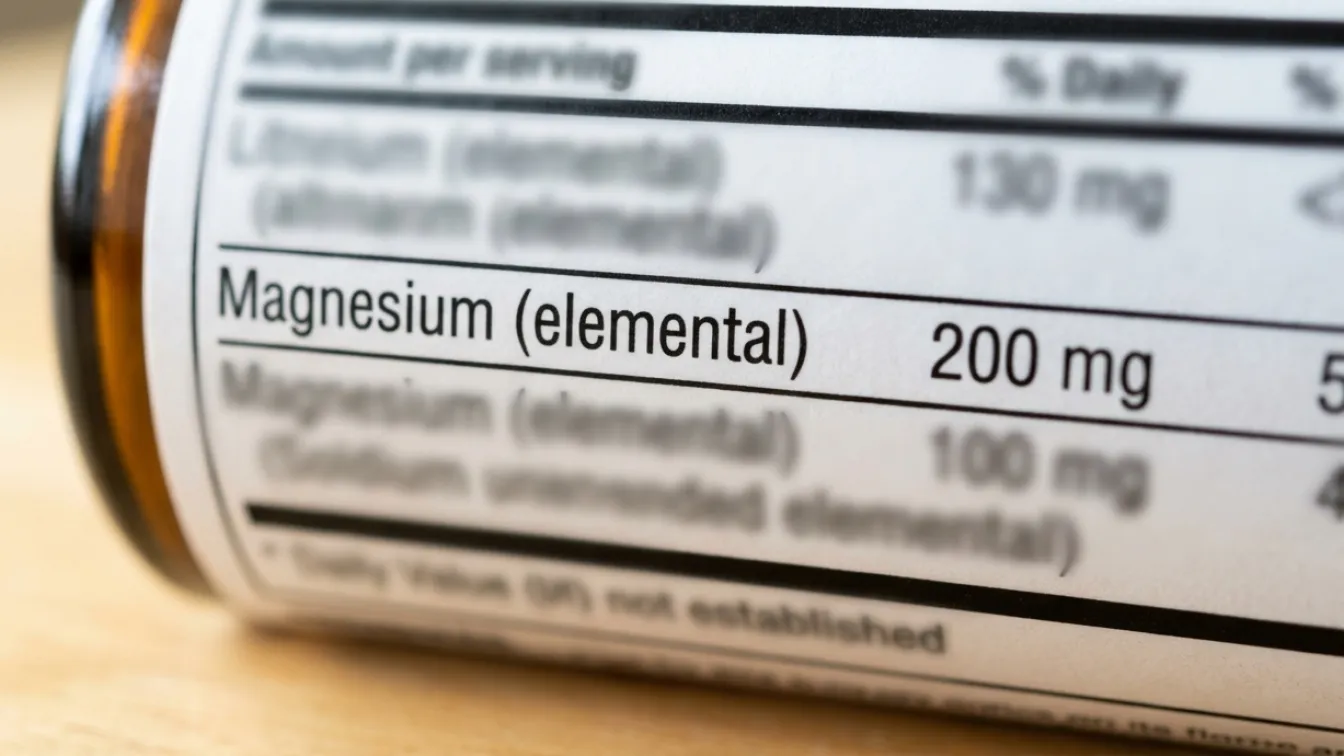
- Find the elemental magnesium figure in the Supplement Facts panel. It is the number followed by a % Daily Value.
- Check the serving size. If 350 mg is four capsules, the bottle holds a quarter of the servings you assumed.
- Read the ingredient line, not the product name. This is where lysinate glycinate, oxide blends and buffering show up.
- Apply the 10% rule. If the elemental share looks far above roughly a tenth of the compound weight, something else is in there.
- If a certification is claimed, check the certifier’s register rather than the badge. Thorne’s NSF Certified for Sport listing appears in NSF’s own public database, which is why that review treats it as verified; several badges I have looked at elsewhere are graphics the company made itself.
If you want the products that survive all six checks, they are in my comparison of six magnesium brands on cost per 100 mg of elemental magnesium.
Where to buy the six products
Whatever the label calls it, these are the six glycinate/bisglycinate products whose labels I read for this article. Sizes vary between listings, so check the count before you buy.
- Solaray (my review) — see current prices and sizes on AmazonOutside the US? Canada: search Amazon.ca
- Pure Encapsulations (my review) — see current prices and sizes on AmazonOutside the US? Canada: view on Amazon.ca
- Doctor’s Best (my review) — see current prices and sizes on AmazonOutside the US? Canada: search Amazon.ca
- NOW Foods (my review) — see current prices and sizes on AmazonOutside the US? Canada: search Amazon.ca
- Thorne (my review) — see current prices and sizes on AmazonOutside the US? Canada: search Amazon.ca
- Qunol (my review) — see current prices and sizes on AmazonOutside the US? Canada: search Amazon.ca
As an Amazon Associate I earn from qualifying purchases. This never changes a score, a ranking or a verdict — those are decided before any commercial link is considered.
Common questions
Is magnesium bisglycinate more effective than magnesium glycinate?
No. They are two names for the same chelate, so there is no efficacy difference to measure. Any page claiming one absorbs better than the other is comparing a word with its own abbreviation. What genuinely varies between products is the elemental dose, whether the chelate is fully reacted, and whether cheaper magnesium salts have been blended in.
Is magnesium bisglycinate good for sleep?
It is the form most of the sleep research has used, and it is well tolerated, which matters if you are taking it nightly. But the evidence is more modest than the category’s marketing suggests, and the dose does the work rather than the form. I set out the trials and the sensible doses in my magnesium and sleep guide.
Who should not take magnesium bisglycinate?
Anyone with reduced kidney function should not take supplemental magnesium without medical supervision, because impaired kidneys cannot clear the excess. Magnesium also interferes with the absorption of several medicines, including some antibiotics and bisphosphonates, which usually means separating the doses by a few hours rather than avoiding it. If you take prescription medication, ask your prescriber or pharmacist before starting.
Can I take magnesium glycinate with Paxil?
This is a question for your prescriber, not for a review site, and I am not going to give you a yes or no. What I can tell you is why the question is sensible: magnesium is one of the minerals with a long list of drug interactions, and the glycine in the chelate is an amino acid with its own activity in the nervous system. Neither of those makes a problem certain, and magnesium is not contraindicated with SSRIs as a class. Take the actual bottle to a pharmacist and ask — it is a free conversation and it takes two minutes.
What is the difference between magnesium glycinate and magnesium lysinate glycinate?
That one is a real difference, unlike the bisglycinate question. Magnesium bisglycinate binds magnesium to two glycine molecules. Magnesium lysinate glycinate binds it to lysine as well. Both are genuine chelates and both are well tolerated, but they are not the same compound — and the sleep research people cite for “magnesium glycinate” used the bisglycinate. Doctor’s Best sells the lysinate glycinate, which is why its review spends so long on the distinction.
Sources
- Supplement Facts panels for NOW Foods, Thorne, Solaray, Pure Encapsulations, Doctor’s Best and Qunol, as read for each of the individual reviews linked above. Where a brand publishes its panel only as an image, the review says so.
- NOW Foods’ published testing of competing Amazon magnesium products — the source of the four labelling findings quoted above, covered in full in the NOW Foods review.
- NSF’s public register of products Certified for Sport — queried directly to confirm Thorne’s listing rather than relying on the badge.
- NIH Office of Dietary Supplements — Magnesium — intakes, the supplemental upper limit, kidney cautions and drug interactions.
- Google’s first page of results for “magnesium bisglycinate vs magnesium glycinate”, United States, desktop, retrieved 18 September 2026. The two quoted passages were then read on the publishers’ own pages rather than taken from search snippets.
Prices and formulations were checked in September 2026 and change without notice, so always read the panel on the product you actually receive. This page is for general information and is not medical advice. If you have kidney disease, are pregnant or breastfeeding, or take prescription medication, speak to a qualified professional before taking magnesium or any other supplement.

Roy Douele founded inareview and writes every review on the site. He is not a medical professional. Each review is built from the product's label, the brand's own testing documents, public certification registers and the published clinical research, then scored out of 10. Brands cannot pay for a review or influence a score.
View All Articles