Qunol Magnesium Glycinate Review: Benefits, Side Effects and the Absorption Claim


Disclosure & independence
No brand pays for coverage on inareview, and no brand sees an article before it is published. Products are assessed against published criteria, not against what a company would like to read.
This article contains affiliate links. If you buy through one I may earn a commission, at no additional cost to you. A commission never changes a score, a ranking or a verdict: those are decided before any commercial link is considered.
Full details in my affiliate disclosure, editorial policy and testing methodology.
Many product pages only restate Supplement Facts without any real analysis. This Qunol Magnesium Glycinate review does something different: I read the label line by line, checked the “high absorption” claim against the published clinical evidence, worked through what long-term customer reports consistently show, and dug into the fine print that brands would rather you skip. What this article answers is straightforward: does Qunol Magnesium Glycinate perform as advertised, is the absorption claim real, and should you buy it or spend your money elsewhere?
There is also a legal matter worth knowing before you decide. A class action filed in 2023 alleged that Qunol’s magnesium supplements contained significantly less magnesium than the label claims. I have not been able to establish how that case ended from publicly available records, so this review does not claim an outcome either way. I set out what is documented below. The inareview score comes at the end, and it reflects everything I found, including the inconvenient parts.
Comparing brands? I put this one head to head with every other brand I have assessed in my comparison of the best magnesium glycinate brands, on cost per 100 mg and on whose testing actually holds up. The cheapest of the six per 100 mg is Doctor’s Best, at 10.0¢ — though it sells a lysinate glycinate chelate rather than the bisglycinate most buyers are looking for.
What’s actually in each serving of Qunol chelated magnesium
The elemental magnesium per dose and labeling nuances
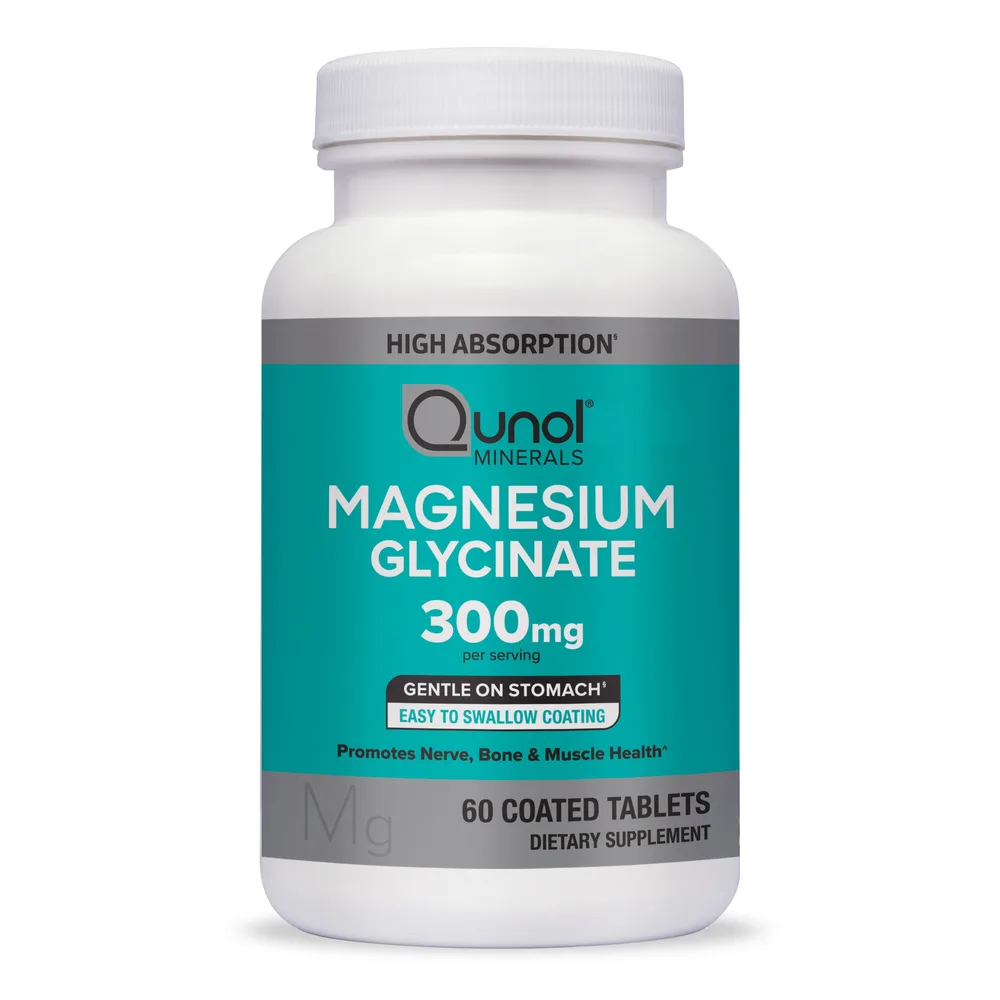
Qunol labels this product as “Magnesium (as chelated magnesium glycinate), 300 mg” across most major retailers. Amazon, CVS, Walgreens, Vitacost, and Qunol’s own site all present the serving as 300 mg of elemental magnesium, verify the current label on each retailer’s product page before purchasing, since packaging can change between batches. That consistency across channels is a point in Qunol’s favor. The chelated form means the magnesium is bound to two glycine molecules, which is designed to improve absorption and reduce GI irritation compared to inorganic forms like oxide.
There is one labeling exception worth flagging: Target lists the product as “300 mg per two tablets.” If you buy from Target and assume one tablet delivers 300 mg, you’re getting half the dose you intended. This is not a minor distinction. Always read the serving size before assuming anything.
Additives, pill format, and what you’ll notice at first glance
The inactive ingredients include microcrystalline cellulose, dicalcium phosphate, stearic acid, maltodextrin, talc, croscarmellose sodium, guar gum, hydroxypropyl methylcellulose, polyvinyl alcohol, and medium chain triglycerides. These are common excipients; none are considered unsafe at typical supplement levels for most users. Based on product photos that may vary by batch, the tablet has a film coating and is standard white in appearance.
What is less standard is the size. The pills are large. This is not a nitpick that shows up occasionally in customer reviews, it is one of the most consistent complaints across Amazon and Walmart verified purchasers. If swallowing large tablets is difficult for you, that is a real usability issue to factor into your decision before you buy a 90-count bottle.
How this Qunol magnesium glycinate review was done
What this assessment is based on
I want to be straight about the method, because it changes how you should read what follows. This is a label, evidence and disclosure analysis, not a hands-on trial. I have not taken this supplement. What I have done is compare the Supplement Facts panel across every major retailer that stocks it, check the “high absorption” claim against the published clinical literature on magnesium glycinate, read through the recurring themes in verified customer reviews on Amazon, Walmart and iHerb, and check the court record behind the potency litigation.
That is a weaker basis than a controlled trial and I would rather say so than dress it up. Where I describe how the product feels to take, I am reporting what buyers say and labelling it as such, never presenting someone else’s experience as my own. What this approach is good for is the part most reviews skip: reading the label properly, checking whether the claim on the front survives the evidence, and telling you what the company would prefer you did not notice.
The inareview scoring system and affiliate disclosure
The inareview score out of 10 is calculated across five weighted categories: formulation quality, bioavailability evidence, reported real-world performance, value for money, and third-party testing transparency. Each category is scored independently and then combined into a final number, exactly as described in my testing methodology. Affiliate arrangements are disclosed at the top of the article because transparency is the policy here, not a footnote buried at the bottom. Any commission earned does not change how a product scores, and never will.
Does the “high absorption” claim hold up against the science?
What human studies actually show about magnesium glycinate bioavailability
Qunol markets this product as “high absorption magnesium glycinate.” That claim deserves honest scrutiny. The clinical picture is this: magnesium oxide absorbs poorly, with fractional absorption around 4%. Citrate and glycinate both fall into a significantly higher absorption range. But here is where the marketing gets ahead of the evidence, glycinate does not have strong direct human trial data showing it absorbs meaningfully better than citrate. The two forms cluster in a similar range.
Glycinate’s real advantage is tolerability, not absorption dominance. People with sensitive digestive systems who experienced loose stools or cramping with citrate often do fine with glycinate. That is a legitimate and clinically useful distinction. It is just not the same as the “superior absorption” framing that “high absorption” implies. Know what you’re actually buying: a well-tolerated form, not a pharmacokinetically superior one.
The potency lawsuit you should know about before buying
In March 2023, Cohen et al. v. Quten Research Institute, LLC (No. 2:23-cv-01783) was filed in the U.S. District Court for the District of New Jersey by Dalit Cohen and Rosemary Robertson. The complaint concerns Qunol’s Extra Strength magnesium capsules, labelled 420 mg of magnesium as magnesium glycinate per two-capsule serving, and alleges that capsules of that size cannot physically hold that much magnesium in glycinate form. Quten denies the allegations. The complaint is about the capsule product, not the tablet format discussed in this review. What happened next is where I have to stop short. I could not establish the outcome of the case from publicly available records, and I am not going to report a resolution I cannot verify. What is documented is the filing and the allegation itself. Treat it as an open question rather than a proven defect — an allegation is not a finding, and the company has not been shown to be at fault.
ConsumerLab has approved Qunol products, but the approvals documented in their database cover Qunol’s CoQ10 and turmeric products, not specifically this magnesium glycinate SKU. There is no publicly available, batch-specific certificate of analysis for this exact product that I could locate. That is not proof of a problem. It is a transparency gap, and it matters when separate litigation has questioned the brand’s potency claims. For a contrast of how that gap can be closed, Solaray states that its finished products are anonymously purchased and independently tested in ISO 17025 accredited laboratories — wording that rules out hand-picked samples, which I go through in my Solaray magnesium glycinate review.
Sleep, recovery and side effects: what the evidence and the users report
What users consistently report for sleep and relaxation
Sleep is by far the clearest theme in the customer feedback. Across thousands of verified reviews on Amazon, Walmart and iHerb, the dominant pattern is consistent: people report settling more easily at night and describe the effect as calming rather than sedating, and it is the reason most repeat buyers give for reordering. Reports of the effect appearing within the first couple of weeks are common — and so are reports of no noticeable change at all, which is what you would expect from a nutrient that helps most in people who were short of it to begin with. Magnesium is not a sleeping pill, and the evidence for it as a sleep aid in people who are not deficient is thinner than the category’s marketing implies. If sleep is your main reason for buying, it is worth reading what the evidence actually shows about magnesium glycinate for sleep before settling on magnesium alone.
Muscle cramps, recovery, and Qunol magnesium side effects worth knowing
Muscle cramp and recovery reports are far more mixed. Some users describe reduced muscle tension and fewer post-workout cramps; plenty of others notice nothing at all. That split is consistent with the broader evidence: a Cochrane review found that magnesium is unlikely to provide clinically meaningful relief for general muscle cramps in older adults, even though anecdotal reports remain common.
Digestive tolerance is where glycinate earns its reputation, and the customer feedback supports it: complaints of the loose stools that citrate commonly causes at equivalent doses are rare for this product. Individual responses still vary, and a minority do report stomach upset. The pill size, on the other hand, is the single most frequent complaint in the reviews — the tablets are large, and many buyers find them uncomfortable to swallow, particularly last thing at night. It is a legitimate friction point rather than an exaggerated one, and it is worth weighing before committing to a 90-count bottle.
Who benefits most and how it compares to other magnesium forms
Who actually benefits from magnesium glycinate
Not everyone needs to choose glycinate specifically, and the premium over citrate is only worth paying in certain situations. People who have already tried magnesium citrate and found the GI effects intolerable get a clear benefit from switching, glycinate’s tolerability advantage is real even if its absorption edge is overstated. Those prioritizing sleep quality as the primary goal also tend to do well, since the glycine component has its own calming properties that may contribute to nighttime relaxation. And individuals correcting a confirmed magnesium deficiency who need consistent daily supplementation without digestive disruption have good reason to choose this form. The same 200 to 300 mg elemental target appears in the stress literature, which I go through in my guide to the best supplements to lower cortisol.
If you already tolerate citrate without issues, switching to glycinate for absorption reasons alone is not well supported by the evidence. You would likely pay more for an equivalent outcome. The choice comes down to tolerability and goals, not bioavailability marketing.
Magnesium glycinate vs. citrate vs. malate: the honest comparison
The absorption hierarchy across forms is clear at the bottom and fuzzy at the top. Oxide is the weakest by a significant margin. Citrate, glycinate, and malate cluster together in the higher absorption range, with no single form conclusively proven superior to the others in direct human trials. Glycinate wins on GI tolerability. Animal and preliminary human studies suggest malate may support energy metabolism and muscle function, though direct head-to-head human comparisons to glycinate are limited. Citrate is generally the least expensive of the three better-absorbed options.
The practical framework: choose citrate if price matters and you have no GI sensitivity. Choose glycinate if tolerability is your primary concern or sleep support is the goal. Consider malate if muscle function and energy are the focus, with the caveat that the evidence base is thinner.
The inareview verdict: score, dosing advice, and where to buy
Qunol magnesium glycinate score out of 10
The inareview score for Qunol Magnesium Glycinate is 7.0 out of 10. Here is how that breaks down across the five scoring categories:
- Formulation quality: Scores well. Chelated magnesium glycinate is a legitimate and appropriate form, and labeling is mostly consistent across retailers.
- Bioavailability evidence: Scores lower. The “high absorption” claim overstates the differentiation from citrate.
- Real-world performance: Earns a solid score for sleep and tolerability, with deductions for variable cramp results and individual non-response.
- Value for money: Competitive at current pricing, with pill size factored in as a usability deduction.
- Third-party testing transparency: Takes the biggest hit. The absence of a publicly available, batch-specific COA for this product, combined with an unresolved potency allegation whose outcome is not publicly verifiable, leaves a gap the final score reflects honestly.
Practical dosing guidance and buying advice
For sleep-focused use, take 200 to 300 mg of elemental magnesium 30 to 60 minutes before bed. For muscle recovery, take it post-workout. Do not exceed 350 mg from supplements daily without medical guidance, particularly if you have kidney disease or take medications that interact with magnesium. Pricing varies by retailer and changes frequently, so calculate the per-serving cost at your preferred outlet before buying, the Target version requires particular attention to the two-tablet serving size, which catches many buyers off guard. If GI tolerance is not a concern and cost matters, magnesium citrate delivers comparable results at a lower price point.
Qunol Magnesium Glycinate is a solid, well-tolerated product for sleep support and deficiency correction. The absorption advantage over citrate is overstated in the marketing. The outcome of the potency lawsuit could not be verified from public records, and the absence of a public batch-specific COA leaves transparency questions that have not been fully answered. And the pill size is genuinely inconvenient. A 7.0 out of 10 reflects a product that works for the right person, it just doesn’t dominate the category. If GI sensitivity is your concern or sleep is your primary goal, it is worth trying. If neither applies, citrate at a lower price point is the more logical choice. My guide to choosing a supplement that is actually worth it breaks down the label checks without the marketing spin.
Note: this review is for general information and is not medical advice. Speak with a doctor or pharmacist before starting a magnesium supplement, especially if you have kidney disease, take prescription medication, or are pregnant or breastfeeding.
Where to buy
Check the serving size on the listing you choose: the 300 mg is delivered as tablets, and at least one major retailer counts that dose as two of them.
Check current prices and sizes on AmazonOutside the US? Canada: search Amazon.caAs an Amazon Associate I earn from qualifying purchases. This never changes a score, a ranking or a verdict — those are decided before any commercial link is considered.
Common questions
Is there a Qunol magnesium lawsuit?
Yes. Cohen et al. v. Quten Research Institute (D.N.J., No. 2:23-cv-01783), filed in March 2023, alleges that Qunol’s Extra Strength magnesium capsules cannot physically hold the 420 mg of magnesium as glycinate the label claims. Qunol denies it. I could not find a public outcome, so treat it as an open allegation, not a finding.
Are there other lawsuits against Qunol?
Two that I could verify. In Swetala v. Quten (E.D. Cal.), a judge ruled in March 2025 that false-advertising claims over Qunol Extra Strength Turmeric could proceed. In Willis v. Quten (S.D. Cal., filed July 2026), the plaintiff alleges that Qunol Ultra Omega-3 Fish Oil contains about 404 mg of omega-3 against 1,000 mg on the label. Both are allegations, not findings.
Sources
This review is a label, evidence and disclosure analysis, so everything factual in it traces back to a document you can open yourself.
- Predicting and Testing Bioavailability of Magnesium Supplements — the published absorption data that the “high absorption” claim on the label is measured against.
- Cohen et al. v. Quten Research Institute, LLC — class action filing, District of New Jersey, March 2023 — the potency allegation described above. An allegation, not a finding: I could not establish the outcome of the case and do not report one. Court docket: CourtListener, No. 2:23-cv-01783.
- Swetala v. Quten Research Institute, LLC, No. 1:24-cv-00620 (E.D. Cal. Mar. 28, 2025) — ruling allowing the false-advertising claims over Qunol Extra Strength Turmeric to proceed.
- NutraIngredients, 19 August 2026 — Willis v. Quten Research Institute (S.D. Cal.) — the omega-3 allegation and the company’s response.
- ConsumerLab — Qunol product database — what ConsumerLab has actually approved under the Qunol name, which is the CoQ10 and turmeric range rather than this magnesium SKU.
- NIH Office of Dietary Supplements — Magnesium fact sheet — the recommended daily intakes and the upper limit for supplemental magnesium used in the dosing advice.

Roy Douele founded inareview and writes every review on the site. He is not a medical professional. Each review is built from the product's label, the brand's own testing documents, public certification registers and the published clinical research, then scored out of 10. Brands cannot pay for a review or influence a score.
View All Articles