Walking Pad vs Treadmill: Which One Do You Actually Need?

Disclosure & independence
No brand pays for coverage on inareview, and no brand sees an article before it is published. Products are assessed against published criteria, not against what a company would like to read.
This article contains affiliate links. If you buy through one I may earn a commission, at no additional cost to you. A commission never changes a score, a ranking or a verdict: those are decided before any commercial link is considered.
Full details in my affiliate disclosure, editorial policy and testing methodology.
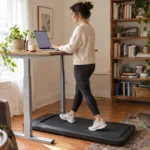
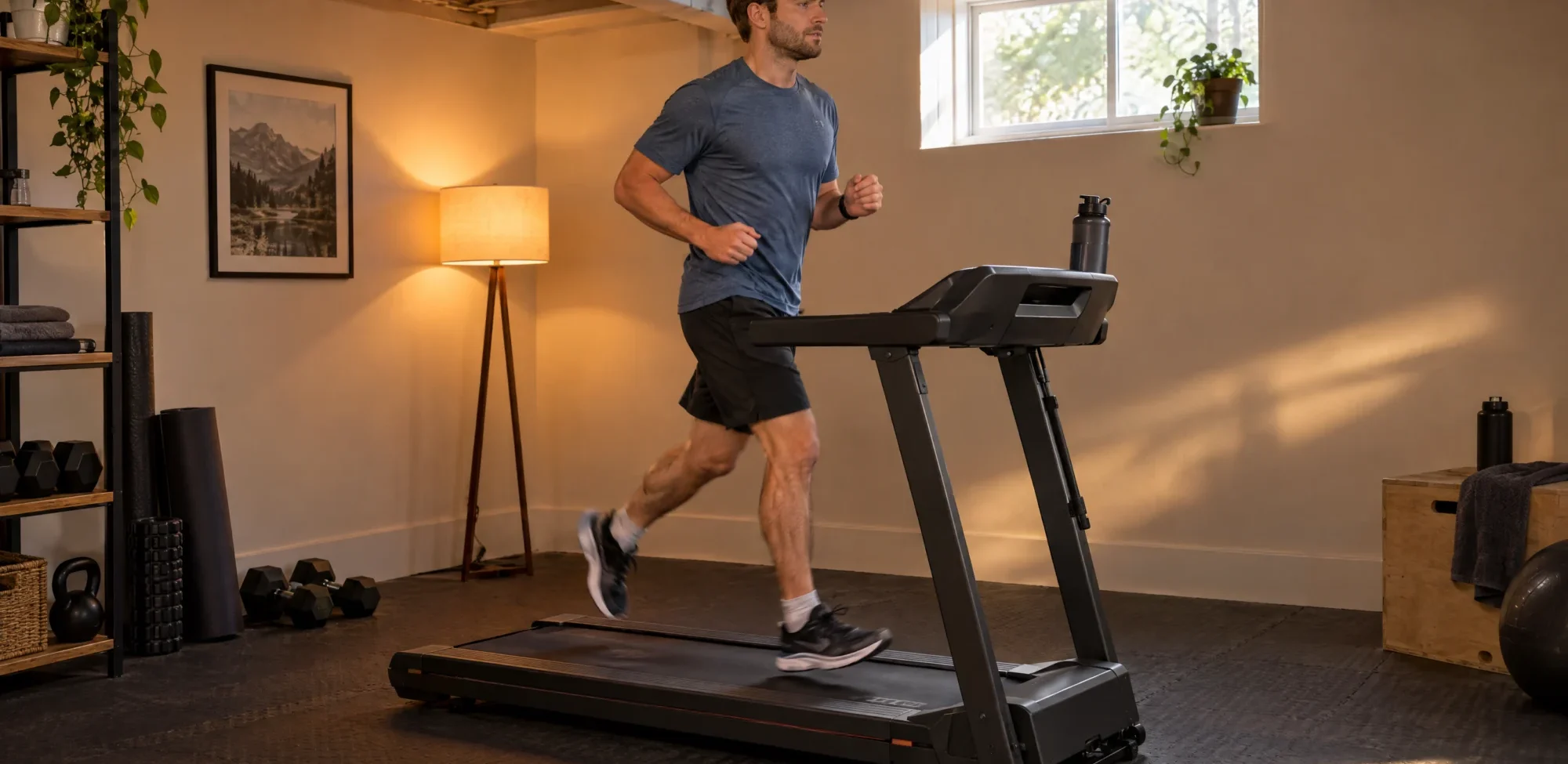
Walking pad or treadmill? Buy a walking pad if you mainly want to walk, especially at a desk, and have little space. Buy a treadmill if you want to run. A walking pad is a flat, motorised belt that usually stops at about 4 mph, has no tall frame and slides under a sofa. A treadmill has a longer, wider belt, handrails and a motor built to sustain running speeds, but it costs more and takes up a corner of a room for good.
The two are often sold side by side and the names overlap, so here is how they differ on the things that matter: speed, belt size, weight capacity, space, safety, calories and price.
How this article was done
I have not used these machines; this is a comparison of published specifications and standards, not a hands-on test. Walking pad figures come from the five models in my best walking pad comparison; calorie figures come from the 2024 Adult Compendium of Physical Activities, the standard research reference for the energy cost of activities. The method is described in how I assess home fitness machines.
The short version
| Walking pad | Treadmill | |
|---|---|---|
| Top speed | About 4 mph (6.2 mph on some 2-in-1 models) | Usually 10 mph or more |
| Belt length | About 36–47 inches | 55–60 inches or more for running |
| Handrails | Usually none, or a fold-down bar | Yes, with a console |
| Max user weight | 220–400 lb in the models I compared | Often 300 lb or more |
| Incline | None on most; up to 12% on a few | Common, often 10–15% |
| Storage | Slides flat under a sofa or bed; some fold in half | Stays out; some decks fold upright |
| Price | About $110–$450 for the models I compared | Several hundred to a few thousand dollars |
| Best for | Walking at a desk, small homes, light use | Running, intervals, steep incline training |
Speed and belt size: the real dividing line
The biggest practical difference is what you can do on the belt. Most walking pads top out around 4 mph, which is a brisk walk. Even the 2-in-1 models that raise a handle and reach 6.2 mph only allow a light jog.
Belt length matters just as much. WalkingPad, which makes both walking pads and treadmills, says on its own buying guide that 40 to 50 inches of belt is generally enough for walking, but at least 55 inches is recommended for jogging and running. The walking pads I compared have belts of 36 to 47 inches. Running on a short belt shortens your stride and raises the risk of stepping off the back.
Space and storage
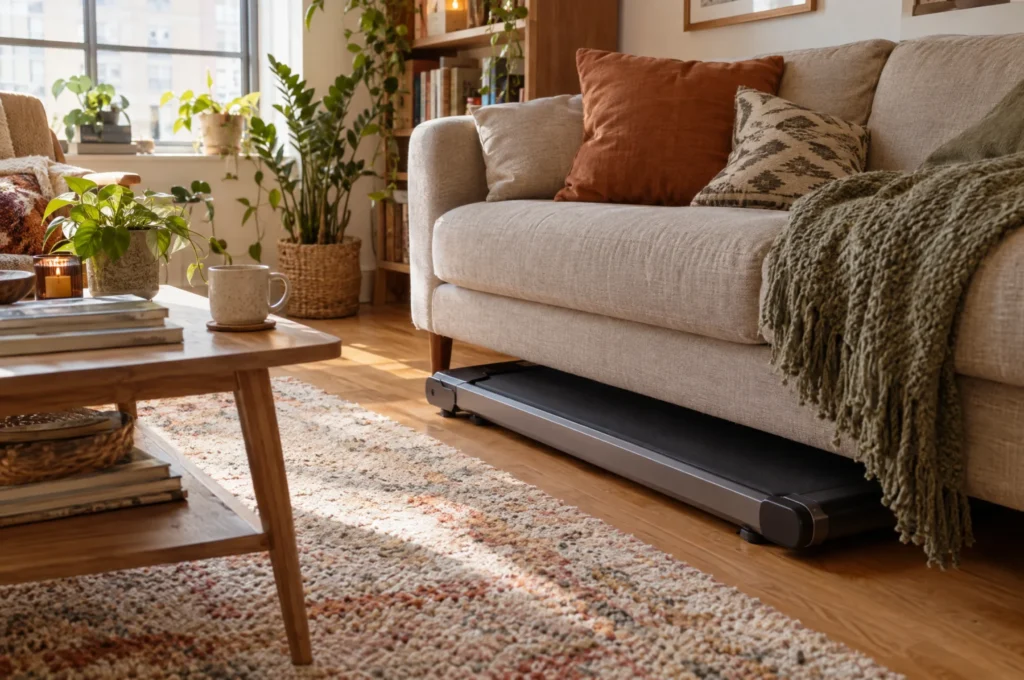
This is where walking pads win clearly. A typical walking pad is about 4 to 6 inches tall and weighs roughly 35 to 70 lb, so it can slide under a sofa, bed or desk. Some, like the WalkingPad C2, fold in half to about 32 inches long. A treadmill needs a permanent footprint plus clear space behind it, and even folding models stand several feet tall when stored.
Safety
Treadmills have handrails and usually a safety key that stops the belt if you fall. Most walking pads have neither, so they are best for steady walking at a pace where you would not need to grab anything.
Brand matters for both. In April 2026 the US Consumer Product Safety Commission warned owners of Sperax walking pads and treadmills to stop using them immediately, citing 573 reports of overheating or fire and at least 66 falls or injuries; the importer refused an acceptable recall. Before buying any model, check the CPSC website for recalls and warnings.
Calories: does walking at a desk count?
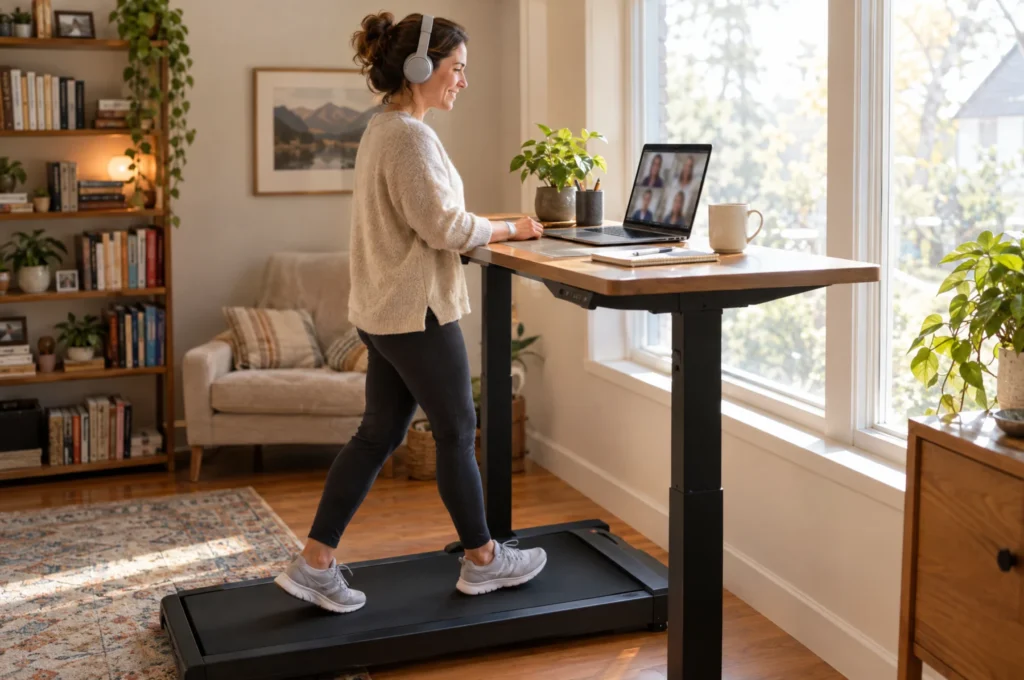
Yes, more than sitting, but less than a workout. The 2024 Adult Compendium of Physical Activities lists walking at a treadmill desk at 1 to 2 mph at 2.8 METs, walking at about 3 mph at 3.5 METs, and running at 6 mph at 9.8 METs (one MET is roughly the energy you use sitting quietly).
Converted for a 175 lb (80 kg) person, those values work out to roughly:
- Walking pad at a desk, 1–2 mph: about 235 calories an hour.
- Brisk walking, about 3 mph: about 295 calories an hour.
- Running on a treadmill, 6 mph: about 820 calories an hour.
These are estimates of total energy use, including what your body would burn anyway, and individuals vary. The point is the scale: a walking pad adds steady, low-intensity movement across a working day; a treadmill lets you do short, hard sessions.
Price and what it buys
The walking pads I compared cost about $110 to $450. Full treadmills built for running usually start at several hundred dollars and run into the thousands, mainly for a stronger motor, a longer deck, cushioning and a sturdier frame. If you will never run, that extra money buys you little.
Which should you buy?
- You want to move more while you work: a walking pad.
- You live in a small space: a walking pad, ideally one that folds.
- You want to walk and occasionally jog: a 2-in-1 walking pad with a handle.
- You run, do intervals or train on steep inclines: a treadmill.
- You weigh more than about 250 lb: check capacity carefully; a heavy-duty walking pad or a treadmill.
If a walking pad suits you: I compared five popular models on weight capacity, motor, incline, warranty and safety in the best walking pad. My top pick for most people is the UREVO Strol 2E, which walks under a desk and jogs to 6.2 mph with its handle up.
As an Amazon Associate I earn from qualifying purchases. This never changes a score, a ranking or a verdict — those are decided before any commercial link is considered.
Common questions
Is a walking pad as good as a treadmill?
For walking, yes, and it takes far less space. For running, no: most walking pads stop around 4 mph and have belts too short for a running stride.
Can you run on a walking pad?
Generally not. Only 2-in-1 models with a raised handle reach about 6 mph, enough for a light jog. For real running you need a treadmill with a belt of at least 55 inches.
Is a walking pad worth it?
If you sit most of the day and will use it at your desk, it is an easy way to add hours of light movement. If you want hard workouts, a treadmill or outdoor running gives more for your time.
How many calories does a walking pad burn?
At 1–2 mph, about 235 calories an hour for a 175 lb person, based on the 2024 Compendium of Physical Activities. More at higher speeds or with incline.
Do walking pads need handrails?
Not for steady walking at a desk, but a handle helps with balance, especially for older users or at faster speeds. Several models have a fold-down bar.
Are walking pads safe?
Most are, but check the brand: in April 2026 the CPSC told owners of Sperax walking pads to stop using them. Plug the machine directly into a wall outlet and follow the manual.
Sources
- Herrmann SD et al. 2024 Adult Compendium of Physical Activities. Journal of Sport and Health Science. 2024 — treadmill desk walking, 2.8 METs.
- Ainsworth BE et al. 2011 Compendium of Physical Activities — walking at 3 mph (3.5 METs) and running at 6 mph (9.8 METs).
- WalkingPad — What are the usual treadmill dimensions? — belt length guidance for walking and running.
- US Consumer Product Safety Commission — Sperax warning, 16 April 2026

Roy Douele founded inareview and writes every review on the site. He is not a medical professional. Each review is built from the product's label, the brand's own testing documents, public certification registers and the published clinical research, then scored out of 10. Brands cannot pay for a review or influence a score.
View All Articles